
Benefits of Radiant Heating
Radiant heating delivers superior thermal comfort, improved indoor air quality and lower energy demand by aligning building physics with human physiology
Space heating accounts for a substantial proportion of energy use and carbon emissions in buildings. In the UK, domestic space heating represents around 60 percent of household energy consumption, while non-domestic buildings show similarly high heating loads (1). At the same time, poorly designed heating systems are linked to thermal discomfort, respiratory irritation, allergen circulation and energy waste.
Conventional ‘forced-air’ and convective heating systems primarily warm air rather than people and surfaces. This often leads to temperature stratification, draughts, dry air, dust circulation and higher air temperatures than are physiologically necessary. These conditions can increase energy demand while still leaving occupants uncomfortable, tired and dissatisfied.
Radiant heating systems operate on a fundamentally different principle. By transferring heat primarily through infrared radiation to people and surrounding surfaces, radiant systems more closely replicate how humans experience warmth from the sun. A growing body of building science and public health research shows that this approach can improve comfort, indoor environmental quality and energy efficiency simultaneously.
Benefits of Radiant Heating
Improved Thermal Comfort: More stable and uniform comfort at lower air temperatures.
Lower Energy Consumption: Reduced heat losses and lower operating temperatures.
Healthier Indoor Air Quality: Minimal air movement and reduced allergen circulation.
Reduced Draughts and Noise: Low air velocities and silent operation.
Enhanced Spatial and Architectural Quality: No bulky radiators or ductwork required.
Reduced Temperature Stratification: Even vertical temperature distribution supports comfort and efficiency.
Reduction in the Need to Overheat
Reduction in Dry Air Complaints
Compatibility with Low-Carbon Heat Sources: Efficient operation with heat pumps and renewables.
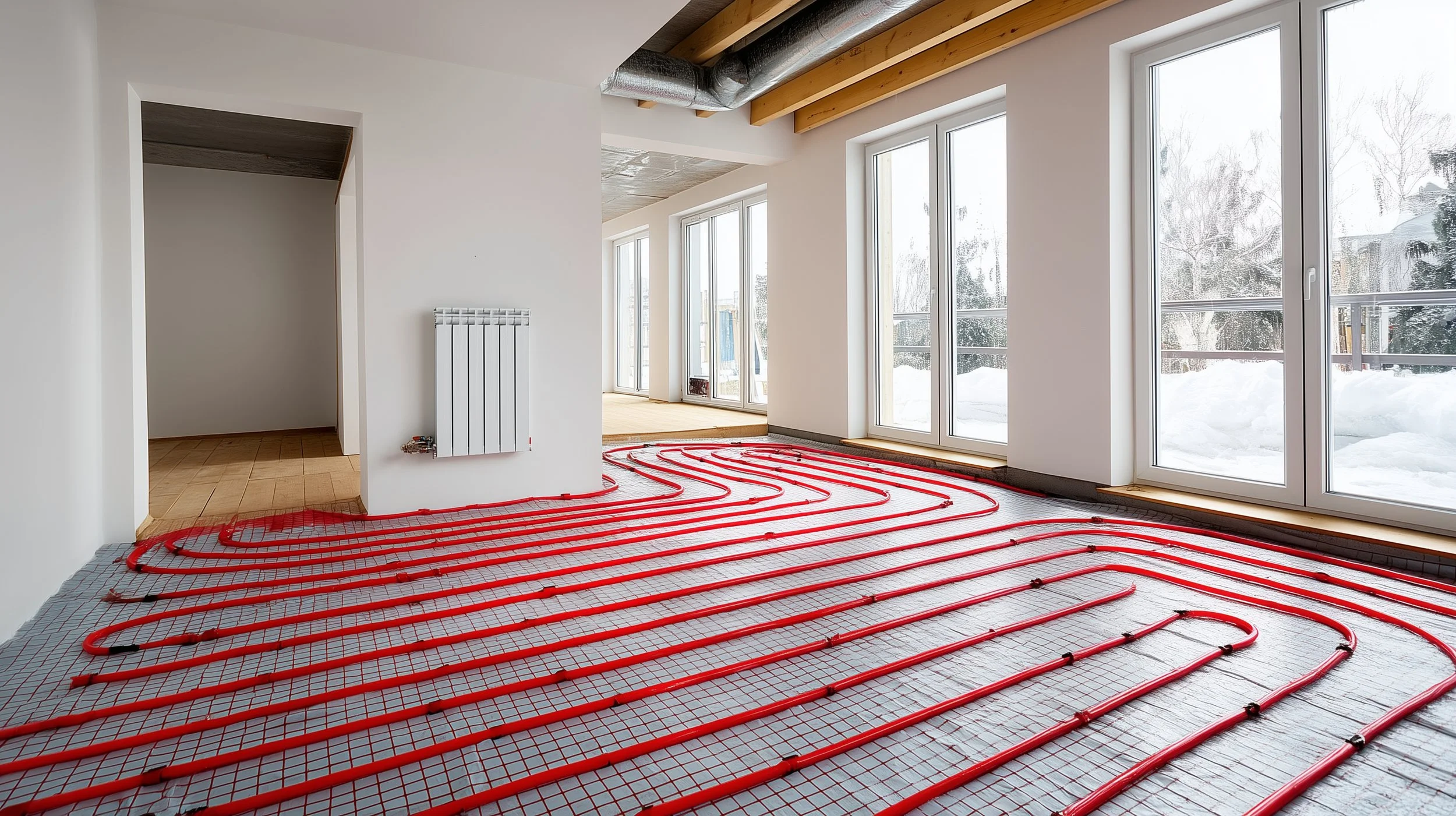
Variety of Possible Installation Locations: Radiant heating systems can be installed below wall finishes, below floor finishes, within ceilings or as panels. Movable and free-standing radiant heaters are an option also.
1 — IMPROVED THERMAL COMFORT
Radiant heating systems improve thermal comfort by increasing mean radiant temperature, which is the average temperature of surrounding surfaces experienced by the human body. Thermal comfort is determined not only by air temperature but also by radiant temperature, air movement and humidity.
Studies show that occupants can experience equivalent or improved comfort at air temperatures 1 to 5°C lower when radiant heating is used, compared with convective (air heating) systems. This is because the body exchanges heat directly with warm surfaces rather than relying on warm air alone.
Radiant systems can achieve equal or better comfort than all-air systems when properly designed, particularly in terms of reduced draught risk, fresher air and more pleasant type of heat.
Optimised thermal environments reduce physiological stress and support comfort for vulnerable populations including older adults, children and people with chronic illness.
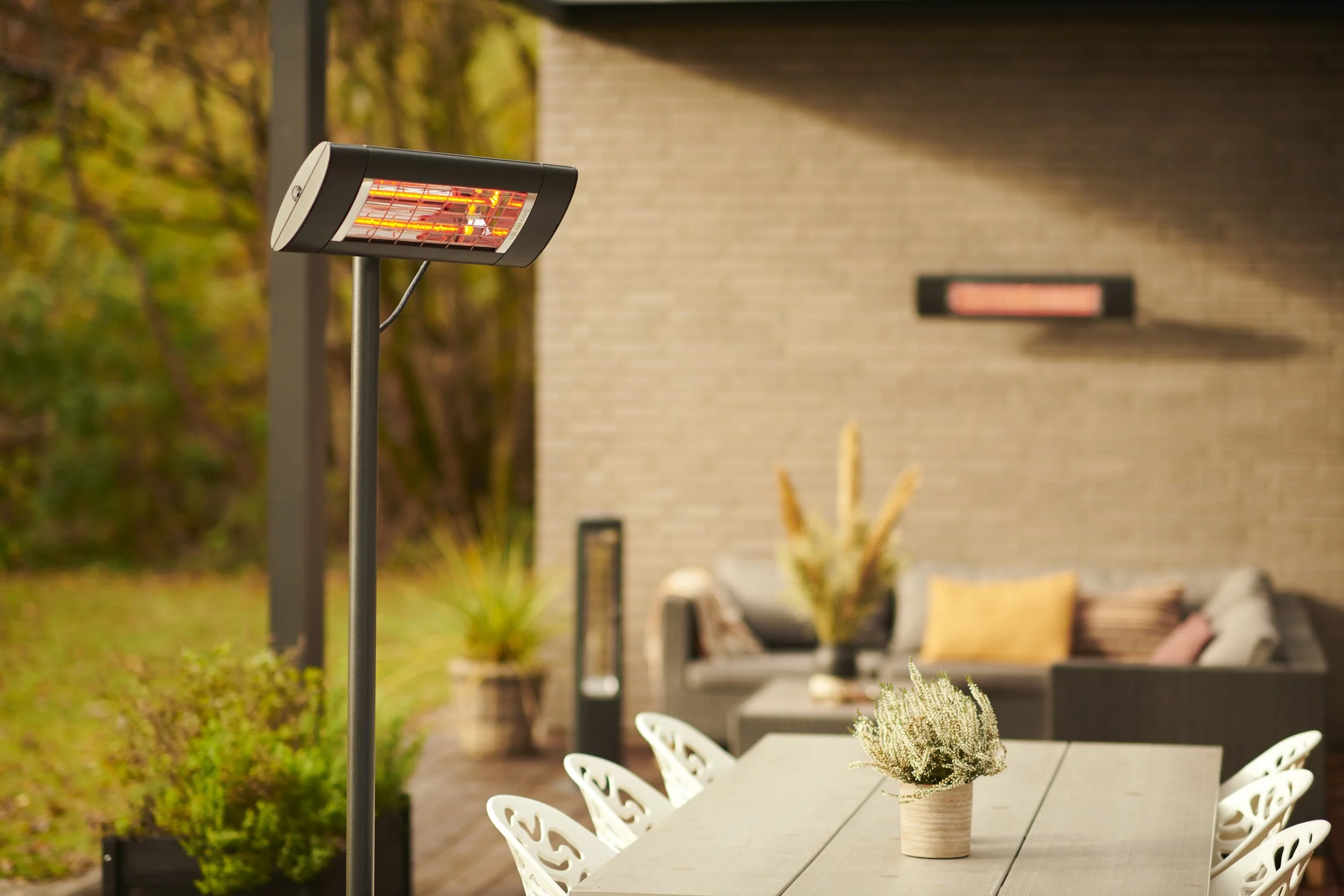
Outdoor patio infrared (radiant) heaters can promote health by encouraging more time spent outdoors.
2 — LOWER ENERGY CONSUMPTION
Radiant heating systems typically operate at lower supply temperatures than conventional systems. Underfloor hydronic systems may operate with water temperatures of 30 to 45°C, compared to 70°C or higher for traditional radiators. (2)
Lower operating temperatures reduce distribution losses and improve system efficiency, particularly when paired with modern condensing boilers or heat pumps. Studies have repeatedly demonstrated reduced energy consumption and peak heating loads in buildings using radiant systems (3).
The US Department of Energy confirms that radiant heating is generally more efficient than forced-air systems because it eliminates duct losses and reduces unnecessary heating of air volumes (4).
Reduced energy demand directly translates into lower operational costs and lower carbon emissions over the building lifecycle.
3 — BETTER INDOOR AIR QUALITY
Radiant heating does not rely on high air velocities to distribute heat. This significantly reduces the resuspension and circulation of dust, pollen and other allergens commonly associated with forced-air systems.
Lower air movement and reduced draughts may benefit respiratory comfort and reduce irritation of the airways, particularly for occupants with asthma or allergies.
Because radiant systems do not require extensive ductwork, they also avoid common hygiene issues associated with poorly maintained HVAC ducts, including microbial growth, dust accumulation and the ‘sick building syndrome’.
People with allergies often prefer radiant heat because it does not distribute allergens throughout the building. (4)
4 — REDUCED DRAUGHTS AND NOISE
Draught discomfort is a frequent complaint in mechanically ventilated and forced-air heated buildings. Even when air temperatures are adequate, air movement across the skin can cause occupants to feel cold.
Radiant heating systems operate with minimal air movement, significantly reducing draught risk. Experimental and review studies confirm that radiant systems have low draught potential and are perceived as more stable and comfortable by occupants (5).
In addition, radiant systems operate silently. There are no fans, blowers or air rushing through ducts. From an environmental psychology perspective, reduced background noise supports concentration, sleep quality and stress reduction, particularly in homes, schools and healthcare settings.
5 — COMPATIBILITY WITH LOW-CARBON HEAT SOURCES
Radiant heating systems are particularly well suited to low-temperature renewable energy sources. These include air-source and ground-source heat pumps, solar thermal systems and district heating networks.
Because radiant systems require lower flow temperatures, heat pumps operate more efficiently, achieving higher coefficients of performance and lower running costs (6).
This compatibility makes radiant heating a strategic component of net zero carbon building design. As electricity grids decarbonise, electrically-driven heat pumps paired with radiant distribution systems offer a future-proof heating solution aligned with climate targets.
6 — ENHANCED SPATIAL AND ARCHITECTURAL QUALITY
Radiant heating systems are typically embedded within floors, walls or ceilings. This eliminates the need for visible radiators, perimeter trench heaters or extensive ductwork.
The absence of bulky heating elements provides greater architectural freedom, improved furniture layouts and cleaner interior aesthetics. From a building performance perspective, reduced penetrations for ductwork can also support airtightness and ‘fabric-first’ design strategies.
Radiant systems integrate particularly well with high-performance building envelopes such as with Passivhaus and other low-energy standards.
7 — REDUCED TEMPERATURE STRATIFICATION
Convective heating systems often result in warm air at ceiling level and cooler conditions near the floor, since hot air rises. This reduces the effectiveness of the heating system.
By contrast, radiant floor, wall and ceiling systems produce a more even ‘vertical temperature profile’. Studies demonstrate reduced stratification and more uniform operative temperatures throughout the occupied zone (7).
Reduced stratification improves comfort while also reducing unnecessary heat accumulation at ceiling level, where it provides little benefit to occupants but increases heat loss through the building envelope.
8 — BETTER PERFORMANCE AND PRODUCTIVITY
“Many studies have shown that when thermal comfort parameters fall outside of […] acceptable ranges there is a significant impact on performance in offices, schools, and homes.”
- Building Evidence for Health: 9 Foundations of a Healthy Building, Harvard T.H. Chan School of Public Health, 2017, p. 14
“There is a large body of evidence that thermal conditions have a significant impact on workplace satisfaction and productivity […] It may be due to a number of causes such as increased sweating, irritability and drowsiness, and general dissatisfaction with the environment (McIntyre, 1980).”
- CIBSE: TM40 Health and Wellbeing in Building Services, 2020, p.78

The sun is the greatest source of radiant heat we know.
Root Causes and Surveys
Many comfort and energy problems attributed to heating systems arise from root causes such as poor insulation, air leakage, inadequate controls and lack of post-occupancy evaluation (POE).
Before specifying radiant heating, it is essential to assess building fabric performance, ventilation strategy and occupant needs. Recommended actions include:
Thermal imaging and air-tightness testing
Considering improvements to thermal insulation and air-tightness
Survey and optimisation of existing heating and cooling systems and controls
Considering opportunities for passive solar heating and cooling
Measurement of room temperatures over time, at different times of the day
Building occupant survey focused on comfort and health
Monitoring of energy use intensity
Monitoring temperature and moisture levels in all rooms.
Undertaking surveys and addressing root causes first ensures that radiant systems deliver their full potential benefits.
Practical Recommendations
Once the surveys have been undertaken and root causes have been addressed, radiant heating system suitability and viability can be reviewed. Practical recommendations for the next steps:
Assess the feasibility of radiant floor, wall, ceiling and panel systems.
Consider a life-cycle assessment (LCA) of different heating, cooling and ventilation options, compared to the existing systems.
Consider integrating radiant heating with low-temperature heat sources such as heat pumps as part of a whole-building decarbonisation strategy.
Consider whether free-standing infrared heaters or radiant patio heaters are also needed.
Consult building services engineers with experience in radiant system design.
Ensure that occupants can control their local thermal environment, via zoning, controls, openable windows and personal comfort devices for both heating and cooling.
Risks & Limitations
Radiant heating is not without limitations. Installation costs can be higher than traditional systems, particularly in retrofit projects where floor build-ups are constrained. Radiant wall or ceiling installations, surface-fixed panels (e.g. ceiling rafts) or infrared radiant heaters can be considered instead, however.
Response times can be slower for high-mass systems if controls are poorly designed. Additional rapid heaters could be utilised in a hybrid system, if this is a concern.
Underfloor heating can feel uncomfortable by some occupants, heating the feet too much and causing fatigue. This can be overcome by installing radiant heating into walls instead, for example.
Some studies note that poorly designed radiant systems can cause local discomfort if surface temperatures are excessive or uneven. However, the consensus in scientific literature is that these risks are design and control issues rather than inherent flaws of radiant heating.
Materials near radiant heat sources, as well as other heat sources, must be carefully chosen, because heat can cause materials to release more air pollutants. Natural and toxin-free materials should be prioritised.
As with all heating and cooling systems, performance depends on holistic integration with ventilation, controls and envelope design.
Conclusion
Radiant heating and radiant cooling solutions for healthy buildings represent a convergence of building physics, human physiology and environmental responsibility. By prioritising how people actually experience warmth, radiant systems move beyond the limitations of air-based heating and cooling, while addressing comfort, spatial design, health, energy use and interior design as an interconnected whole.
As the built environment transitions towards low-carbon, health-promoting design, radiant heating and cooling offer solutions that support both planetary boundaries and human performance in a simple and efficient way. When combined with good envelope design, renewable energy and thoughtful controls, these solutions exemplify a major opportunity to increase thermal health and occupant wellbeing.
Resources & Further Reading
WELL Building Standard: Thermal Comfort: T05 Radiant Thermal Comfort: https://v2.wellcertified.com/en/wellv2/thermal%20comfort/feature/5
Building Biology Institute: “Radiant Heating Factsheet”: https://buildingbiologyinstitute.org/free-fact-sheets/radiant-heating/
CIBSE Journal:
“Module 5: Radiant Heating Panels“: https://www.cibsejournal.com/cpd/modules/2009-06/
“Module 70: Radiant Heating with Low Temperature Hot Water”: https://www.cibsejournal.com/cpd/modules/2014-11/
“Module 126: Radiant Sails for Room Conditioning”: https://www.cibsejournal.com/cpd/modules/2018-05-rad/
“Module 144: Ceiling-Suspended Multiservice Radiant Panel”, https://www.cibsejournal.com/cpd/modules/2019-05-ceiling/
Green Building Advisor: “Radiant Heating and Cooling“: https://www.greenbuildingadvisor.com/article/radiant-heating-and-cooling
UK Government, Department for Energy Security and Net Zero: “Infrared Heating: Investigations from Literature and User Experience Tests”: https://www.gov.uk/government/publications/infrared-heating-investigations-from-literature-and-user-experience-tests
REHAU: Radiant Heating Systems Design Guide: https://www.rehau.com/downloads/497804/radiantheatingsystemsdesignguide-855601-rehau.pdf
Building Design: “CPD 24 2019: Radiant Ceiling Cooling“: https://www.bdonline.co.uk/cpd/cpd-24-2019-radiant-ceiling-cooling/5103022.article
Disclaimer:
We will not accept any liability for the use or misuse of this information. We can provide formal architectural advice only when appointed on a project.
Explore Next:
Discuss radiant heating with NUEN AI: NUEN AI - Healthy Buildings Intelligence tool.
-
1) UK government: Department of Energy & Climate Change: “Domestic Energy Use Study: To Understand Why Comparable Households Use Different Amounts of Energy“, Nov 2012
2) Silvia Cesari, Eleonora Baccega, Giuseppe Emmi, Michele Bottarelli: “Enhancement of a Radiant Floor with a Checkerboard Pattern of Two PCMs for Heating and Cooling: Results of a Real-Scale Monitoring Campaign”, Applied Thermal Engineering, vol 246, 2024, 122887, ISSN 1359-4311
3) Baisong Ning, Youming Chen: “A Radiant and Convective Time Series Method for Cooling Load Calculation of Radiant Ceiling Panel System”, Building and Environment, vol 188, 2021, 107411, ISSN 0360-1323
4) U.S. Department of Energy: “Radiant Heating“ [accessed 5.2.2026]
5) Baisong Ning, Youming Chen, Hongyuan Jia: “Cooling Load Dynamics and Simplified Calculation Method for Radiant Ceiling Panel and Dedicated Outdoor Air System”, Energy and Buildings, vol 207, 2020, 109631, ISSN 0378-7788
6) J.C. Roca Reina, A. Toleikyte, J. Volt, J. Carlsson: “Alternatives for Upgrading from High-Temperature to Low-Temperature Heating Systems in Existing Buildings: Challenges and Opportunities”, Energy and Buildings, vol 323, 2024, 114798, ISSN 0378-7788
7) Michele De Carli, Massimiliano Scarpa, Roberta Tomasi, Angelo Zarrella: “DIGITHON: A Numerical Model for the Thermal Balance of Rooms Equipped with Radiant Systems”, Building and Environment, vol 57, 2012, pages 126-144, ISSN 0360-1323