
Scientists Are Rethinking Fitness — and the Most Important Tool May Be Your Home Layout
Place a glass bottle of water near a window. Now stand up every time you see it, walk up to it and take a few slow sips while gazing out into the distance.
This is not hydration advice, or tips for eyesight improvement — at least not primarily. It is a small demonstration of a much larger idea now reshaping the science of ergonomics: your body may care less about whether you ‘went to the gym’ today than about whether your home environment kept you stationary for the rest of the time.
For decades, fitness has been commercialised, packaged and sold as a relatively brief event. You changed clothes, drove somewhere, performed exercise, showered. You returned to normal life, which, for many people, meant sitting down again. The gym became a kind of movement chapel, a designated place where modern humans went to atone for the sedentary life of the rest of the day.
But a growing body of research is pulling fitness out of that narrow frame. To stay healthy, your body should change position or move approximately every 20 minutes.
The surprising implication is that the most powerful fitness tool in your home may not be a treadmill, a smartwatch or a weight-lifting station. It may be the layout, and how it prompts you to change positions regularly, utilise active furniture and importantly – leave the home to go outdoors.
Being trapped indoors 90% of the time in a largely sedentary lifestyle has been suggested by researchers to be comparable to smoking in terms of health impact (1, 2, 3). The home environment can be designed to give us a 100 triggers per day to be sedentary, or a 100 triggers per day to be active.
“The work our bodies were engineered to do no longer gets done,” says Dan Buettner (4), whose Blue Zones work has helped popularise the idea that long-lived populations tend not to exercise in the modern sense. They inhabit places and live lifestyles that nudge them into moving frequently, often without calling it fitness at all.
The layout of your home is not a passive backdrop. It is a behaviour-modifying environment. It actively shapes your thoughts and feelings throughout the day (5, 6).
And most contemporary homes have been tuned, with astonishing efficiency, to remove movement and keep you indoors – sitting down. This is a triumph of convenience. It is also, biologically speaking, a trap.
The missing movement between workouts
Spend time in a typical home and you’ll soon feel its design impact on your body and mind. One of the most tiring things is staying stationary for a length of time.
Long periods of sitting are associated with poorer cardiometabolic health, even in people who meet exercise guidelines (5). The problem is uninterrupted sitting. Stillness becomes more biologically costly when it arrives in large, unbroken blocks.
One reason is that skeletal muscle is one of the body’s major glucose ‘disposal’ systems. When muscles contract, they can pull glucose out of the blood partly through pathways that do not rely entirely on insulin (8). In simple terms, moving muscle opens extra doors for sugar to leave the bloodstream. Sit for long enough and some of those doors are less active.
This is why short movement breaks after meals have attracted growing scientific interest (9). Light walking, even for a few minutes, can reduce post-meal glucose spikes.
The home, then, becomes crucial. It can either compress daily life into a few seated spots; or be full of small reasons to move and change position throughout the day.
The first question is not: where can I fit a home gym? That is secondary. The more pressing question is: where has my home deleted movement; and how can I put it back?
Why the home gym is often the wrong starting point
There is a peculiar tragedy in many spare rooms: the expensive machine facing the wall, the yoga mat at the back of the wardrobe, the dumbbells under a bed like guilty evidence.
Fitness plans often fail not due to lack of willpower or lack of ambition, but because the spatial design brief is wrong. We create a miniature gym with shiny plastic equipment with prominent logos and expect a new identity to appear inside it, reflecting the values and images the company behind the logo fed us. But human behaviour rarely works that way. A room labelled “exercise” can become strangely easy to avoid, especially if using it requires a big chunk of time, a fair bit of spare energy, change of clothing, privacy, fighting mobile phone distractions to select a playlist, a written-down workout plan that is out of sight.
Behavioural scientists have been circling a different principle: make the desired action smaller, more visible and easier to start (10). In exercise psychology, one of the most damaging traps is the all-or-nothing mindset (11). If a person planned a 40-minute run and only has 12 minutes, they may do nothing. The failed workout becomes a cancelled vote for health.
Michelle Segar, a behavioural scientist at the University of Michigan, has argued that this perfectionism can sabotage movement. In recent work on exercise mindsets, she and colleagues found that when people couldn’t do the workout they imagined, they often skipped movement altogether (12).
This matters for home design because most homes are designed around siloed and isolated categories: work happens at the desk, eating happens at the table, exercise happens on the mat in the corner. But there is great potential in slight interventions for more flexible use of space to keep us more active throughout the day.
What if we also included semi-workout spaces within the home?
Many find that too often they won’t find a 30-minute slot for an exercise class, weights, or the Kung Fu exercise book gathering dust on the bookshelf. Plus the time it takes to change clothes, shower, prepare a post-workout smoothie, and so on. But to do ten push-ups five times a day is easy, even on a busy day. Or two minutes of stretching – while waiting for the kettle to boil, attending a Teams meeting, or talking with someone. Howabout a ’horse stance’ on the balcony before and after work?
A healthier home might not need a gym. It might need a ‘movement threshold’: a patch of floor you pass 20 times a day where two squats, one stretch or 30 seconds of balancing feel almost absurdly easy.
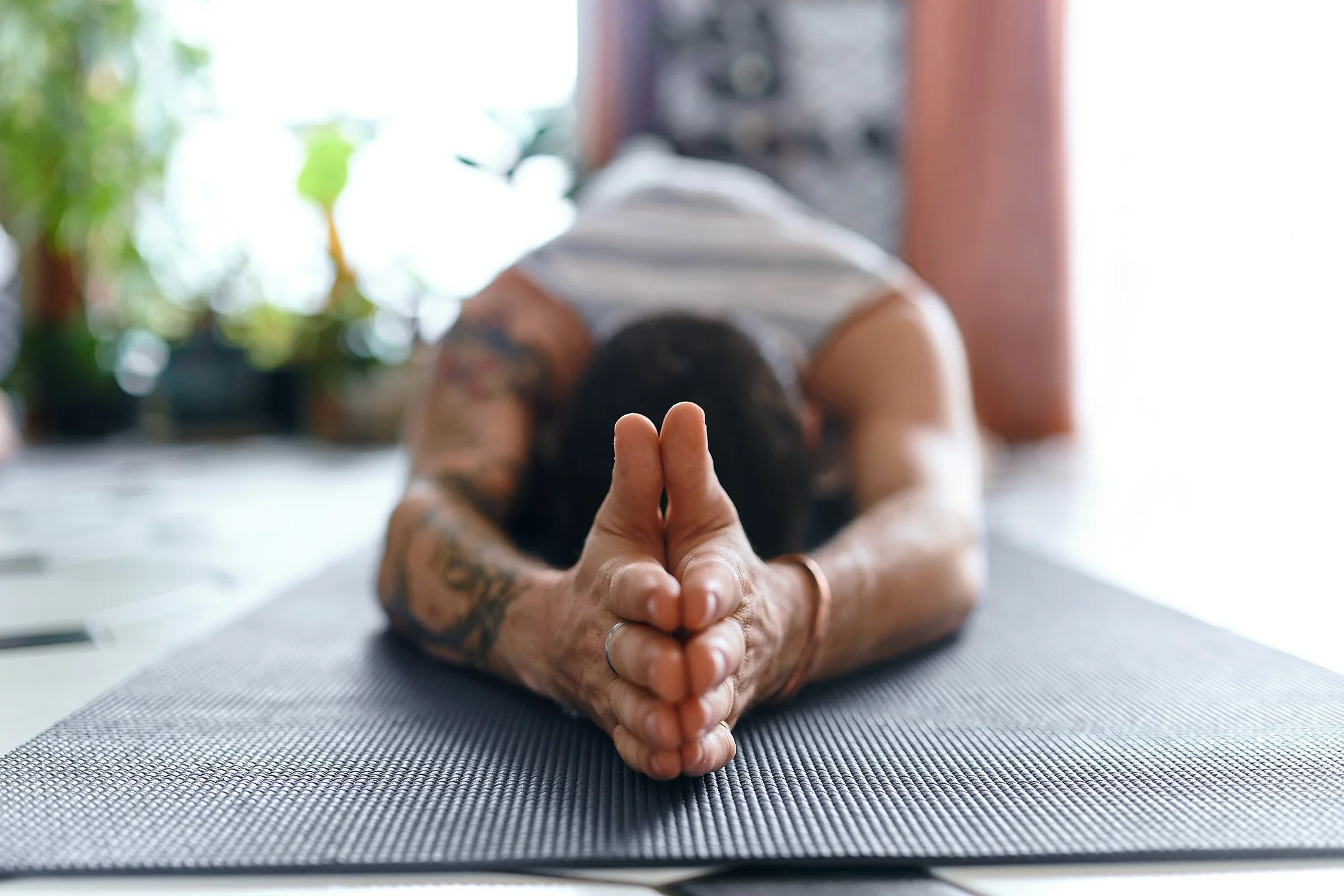
On busy days, a yoga mat left unrolled in a pleasant space can be more powerful than a premium exercise bike hidden in a room you dislike. A pull-up bar in a doorway may be more useful than equipment stored out of sight. A pair of light weights next to the TV may do more for consistency than a full rack in the garage. The best fitness equipment is not necessarily the most advanced. It is the tool that lowers the ‘activation energy’ required for movement to nearly zero.
Activation energy is the friction that makes starting the most difficult part of exercise (13).
The trick is to add friction to sedentary behaviours and remove friction from movement. Your home is a tool for this, although not yet designed as such.
There is plenty of room for innovation and improvement in the field of residential design, to move us away from stagnation and towards activity. Homes can be designed not just as pretty containers of people but as integral parts of healthy living systems.
Create a standing-height surface for making phone calls or for checking emails. Store snacks out of immediate reach but keep fruit visible. Place walking shoes you love by the door. Keep all-weather outdoor clothing visible rather than buried in cupboards. Let the watering can live where you will see it. Put the bike where it can be wheeled out in 20 seconds, not excavated in 20 minutes.
The kitchen as a movement landscape
The kitchen is one of the last domestic spaces where standing, reaching, chopping, washing, bending, carrying and pacing still happen naturally. Cooking is movement with a purpose attached, which makes it psychologically different from exercise. You are not “working out”. You are making (tasty and colourful) soup.
A badly designed kitchen can suppress this. If counters are unpleasant, equipment is outdated, lighting is harsh, air is stale, storage is chaotic, water tastes like chlorine and healthy ingredients are hidden, the room becomes a place of avoidance. Food preparation shrinks. The chair and screen win.
A well-designed kitchen does the opposite. It invites a person to linger upright. It makes vegetables easier to see than biscuits. It has inspirational recipes or video ready and waiting. It allows two people to prepare food together without colliding. It has enough clear counter space for chopping and enough fresh air to make cooking comfortable. It turns meal preparation into a pleasant movement practice.
There is a subtle but important point here. Health advice often tells people what to eat, then ignores the room in which eating decisions happen. Yet behavioural nutrition research repeatedly shows that visibility and ease of access shape choices (14). Foods at eye level are more likely to be eaten. Items on counters act as triggers. Humans are not weak because they respond to cues. We are organisms designed to adapt to our environment and act — mostly subconsciously — from environmental triggers (15).
The same principle applies to movement. If the home offers only seated cues, the body sits. If it offers standing cues, stretching cues, outdoor cues and playful cues, the body moves.
This is where “fitness” starts to look less like discipline and more like spatial design.
The body likes small interruptions
One of the reasons this shift feels radical is that fitness culture loves intensity. There are good reasons for that. Cardiorespiratory fitness and muscular strength are strongly linked with health outcomes. Resistance training matters, especially with age. Vigorous activity can be highly beneficial.
But the body also responds to frequency. It is the 90-95% of a typical day that an average Westerner spends indoors, too often immobile, that matters more (16). A workout will provide a powerful stimulus and definite health gains, yet long sedentary periods between workouts can undo much (or all) of the benefit (17).
A key difference between people with high levels of physical fitness and the occasional exercisers is consistency. (18). A big workout with maximum effort matters less in the long term than the creation of regular and consistent fitness habits (19).
Laboratory studies of sitting breaks suggest that brief, repeated bouts of light activity can improve markers such as glucose and insulin responses after meals (20). Movement does not have to arrive wearing Lycra to count.
Threshold Spaces
There is another piece of the layout puzzle: the door.
Many homes contain a psychological cliff edge between indoors and outdoors. There are no threshold spaces – the contrast between inside and outside is too stark. The entrance halls are generally too small and have too little storage but also: The right shoes are hard to find. The wind-proof coat is in the wrong place. There is no place for outdoor exercise equipment. The garden has no privacy. The balcony is too windy.
Each obstacle adds cognitive burden (21) and makes it more difficult to go out.
The outdoors is generally a healthier place than indoors but — sadly - the modern human has become an indoor species (22). A health-promoting home is one that encourages you to spend more time outside by making it easy to leave the home; by making outdoor spaces comfortable; and by creating threshold spaces that are semi-outdoors while providing shelter from extremes of weather.
How to redesign your home for movement
Start with a movement audit. For one day, notice where your home encourages you to remain still. Where do you sit longest? What objects do you avoid because they are badly stored? Which healthy actions require too many steps? Where is movement pleasant, and where is it irritating?
Start a notebook and regularly write down (or sketch) design changes needed to remove friction and to create inspirational triggers. Test, assess and tweak over time to discover what works well and what doesn’t.
Home as a trap or a launch pad
If your home makes movement every 20 minutes difficult, you are living inside a design problem.
The future of fitness will — and should — still include gyms, coaches, wearables and sophisticated diagnostics. But for most people today the most critical intervention is a home that does not encourage siloed, sedentary activities or ‘mono-spaces’ designed for one purpose; but instead flexible spaces and threshold spaces to inspire a variety of behaviours.
Place the water bottle on the window sill. Hang your bike on the wall. Put an outdoor heater in your garden. Place your mobile phone away from sofas and chairs.
Your home is already training you.
-
1) Klepeis NE, Nelson WC, Ott WR, Robinson JP, Tsang AM, Switzer P, et al. The National Human Activity Pattern Survey (NHAPS): a resource for assessing exposure to environmental pollutants. Journal of Exposure Analysis and Environmental Epidemiology. 2001;11(3):231–252. doi:10.1038/sj.jea.7500165. Available at: https://www.nature.com/articles/7500165
This paper found that people in the US spent, on average, approximately 87% of their time in enclosed buildings and a further 6% in enclosed vehicles.
2) Laskowski ER. What are the risks of sitting too much? Mayo Clinic. Available at: https://www.mayoclinic.org/healthy-lifestyle/adult-health/expert-answers/sitting/faq-20058005. Accessed 25 September 2026.
3) Lee IM, Shiroma EJ, Lobelo F, Puska P, Blair SN, Katzmarzyk PT. Effect of physical inactivity on major non-communicable diseases worldwide: an analysis of burden of disease and life expectancy. The Lancet. 2012;380(9838):219–229. doi:10.1016/S0140-6736(12)61031-9. Available at: https://doi.org/10.1016/S0140-6736(12)61031-9. Accessed: 25 September 2026.
This Lancet analysis estimated that physical inactivity was responsible for around 9% of premature mortality worldwide, equivalent to more than 5 million deaths annually, which is why researchers often compare its public-health burden with smoking.
4) Blue Zones (2018) Why Diet and Exercise Don’t Work – 9 Questions for Dan Buettner. Blue Zones. Available at: https://www.bluezones.com/2016/08/diet-exercise-dont-work/. Accessed: 25 September 2026.“…the work our bodies were engineered to do no longer gets done; our bodies don’t get the regular low-intensity movement they need to thrive.” - Dan Buettner
5) Owen N, Healy GN, Matthews CE, Dunstan DW. Too Much Sitting: The Population-Health Science of Sedentary Behavior. Exercise and Sport Sciences Reviews. 2010;38(3):105–113. doi:10.1097/JES.0b013e3181e373a2. Available at: https://pmc.ncbi.nlm.nih.gov/articles/PMC3404815/. Accessed: 25 September 2026.
6) Evans, G.W. and McCoy, J.M. (1998) ‘When buildings don’t work: The role of architecture in human health’, Journal of Environmental Psychology, 18(1), pp. 85–94. Available at: https://doi.org/10.1006/jevp.1998.0089
Environmental psychology research shows that architectural environments influence human health and behaviour through factors such as stimulation, coherence, affordances, control and restorative quality, meaning that buildings can actively shape how people feel and act rather than functioning as neutral backdrops (Evans & McCoy, 1998).
7) Sussman, A. and Hollander, J.B. (2015) Cognitive Architecture: Designing for How We Respond to the Built Environment. Abingdon: Routledge.
8) Sylow, L., Richter, E.A. and Jensen, T.E. (2017) ‘Exercise-stimulated glucose uptake — regulation and implications for glycaemic control’, Nature Reviews Endocrinology, 13(3), pp. 133–148. doi:10.1038/nrendo.2016.162. Available at: https://www.nature.com/articles/nrendo.2016.162. Accessed: 25 September 2026.
9) Frontiers in Nutrition. (2025) ‘Acute effects of exercise snacks on postprandial glucose and insulin metabolism in adults with obesity: a systematic review and meta-analysis’, Frontiers in Nutrition. doi: 10.3389/fnut.2025.1708301. Available at: https://www.frontiersin.org/journals/nutrition/articles/10.3389/fnut.2025.1708301/full. Accessed: 25 September 2026.