
Benefits of Filtering Drinking Water in the UK
How water filtration can reduce specific chemical exposures, improve taste and support healthier, more sustainable living, even within one of the world’s safest public water systems
The UK has one of the safest and most tightly-regulated drinking water supplies globally. Public water quality is overseen by the Drinking Water Inspectorate (DWI), with over 99.9 percent compliance against statutory standards in England (1). These standards are designed to protect public health at population level and to ensure water is microbiologically safe.
However, regulatory compliance does not mean zero risk or zero contaminants. UK tap water can legally contain disinfection by-products, trace metals, pesticides and emerging contaminants such as per- and polyfluoroalkyl substances (PFAS). These are increasingly scrutinised due to cumulative exposure, bioaccumulation and vulnerable population groups (2).
Filtering tap water in the UK is therefore not a necessity for safety for most households. Instead, it is best understood as a targeted risk-reduction and quality-enhancement strategy, particularly relevant in older buildings, areas with legacy plumbing, or for individuals seeking to reduce chemical exposures as part of a broader healthy living and healthy buildings approach.
Benefits of Filtering Tap Water for Drinking in the UK
Reduced exposure to lead and other metals. Particularly relevant in older properties with legacy pipework.
Lower intake of chlorine and disinfection by-products.
Potential reduction of PFAS, trace organic pollutants and other emerging contaminants not yet fully regulated.
Improved taste and odour, leading to better hydration. Supporting daily water intake and wellbeing.
Protection against building-level contamination risks.
Enhanced security for vulnerable groups, including pregnant women, children and immunocompromised individuals.
Reduced reliance on bottled water: Environmental and economic benefits.
Peace of mind: Behavioural and psychological benefits.
1 — REDUCED EXPOSURE TO LEAD AND OTHER METALS
Lead remains one of the most significant drinking water risks in the UK at household level (3). While water companies are required to control lead concentrations at the point of supply, lead can leach from internal plumbing, particularly in homes built before the 1970s (4).
Plumbing materials are a major determinant of lead concentrations at the tap (5). Even low-level chronic exposure has been associated with neurodevelopmental impacts in children and cardiovascular effects in adults (6, 7).
‘Point-of-use’ filtration using activated carbon and ion exchange has been shown to significantly reduce lead concentrations of drinking water (8). The World Health Organization (WHO) states that there is no safe level of lead exposure and that reduction both at source and point of use is a valid protective strategy (9, 10).
Additional metals that can contaminate UK drinking water include: copper, nickel, chromium, cadmium, arsenic, manganese, iron, aluminium, uranium, etc. (11)
For buildings professionals, this reinforces the importance of considering water quality as part of building health risk assessments, particularly during retrofit and refurbishment projects.
2 — LOWER INTAKE OF CHLORINE AND DISINFECTION BY-PRODUCTS
Chlorine is essential for public water disinfection and has been one of the most effective public health interventions in history. However, when chlorine reacts with organic matter, it forms disinfection by-products (DBPs), including trihalomethanes (THMs). (5)
Studies have linked long-term exposure to higher THM concentrations with increased risks of cancer (12) and adverse pregnancy outcomes (13), although the exposure levels in the UK are generally low.
Activated carbon filtration is well established for reducing free chlorine and many DBPs (14). According to WHO guidance, it is recommended that THM levels are kept as low as practical, provided microbiological safety is not compromised (15).
From a sensory perspective, chlorine is also the main contributor to taste and odour complaints, which directly influence water consumption behaviour.
3 — POTENTIAL REDUCTION OF PFAS AND TRACE ORGANIC POLLUTANTS
PFAS, often referred to as “forever chemicals”, are an emerging concern in UK drinking water. In 2023, at least one PFAS compound was detected in drinking water samples from 17 of 18 English water companies, albeit at very low concentrations (16).
PFAS are persistent, bioaccumulative and associated with immune, possible endocrine and possible carcinogenic effects at higher exposures (17, 18). There is currently no specific, enforced statutory duty in England and Wales to remove PFAS from drinking water beyond general risk management and DWI guidelines [as of Jan 2026].
Laboratory studies show that certain water filters, including granular activated carbon, can reduce PFAS concentrations, though effectiveness varies by compound and depends on filter maintenance. The WHO recommends that countries aim for PFAS concentrations as low as reasonably achievable (19).
Note: Scientific evidence on long-term health benefits of domestic PFAS reduction via household filters is still limited. Filtration should be viewed as a precautionary measure rather than a proven clinical intervention.
4 — IMPROVED TASTE AND ODOUR, SUPPORTING BETTER HYDRATION
Taste perception is a powerful behavioural driver. Even when water is safe, unpleasant taste or odour reduces consumption. A UK-based sensory study found that chlorine-related taste was the most common reason for tap water avoidance (20).
Improved taste through filtration has been consistently shown to increase water intake, which is associated with improved cognitive performance, kidney function, metabolic regulation and reduced risk of many chronic diseases. (21)
From a public health perspective, increased tap water consumption can displace sugar-sweetened beverages, supporting obesity and dental health prevention strategies endorsed by the NHS and Public Health England.
5 — PROTECTION AGAINST BUILDING-LEVEL CONTAMINATION RISKS
Water quality at the treatment works does not guarantee quality ‘at the tap’. ‘Building-level’ factors such as water flow stagnation, inappropriate materials and poor maintenance can degrade water quality.
Risks associated with internal water systems include microbial growth and metal leaching. Badly maintained water filters themselves can also harbour pathogenic micro-organisms.
At home water filtration acts as a final barrier within a multi-barrier approach to water safety, but it is important that a correct filter type is chosen and the filters are properly maintained.
6 — SUPPORT FOR VULNERABLE POPULATION GROUPS
Certain groups are more susceptible to low-level chemical exposures, including children, pregnant women and individuals with chronic kidney disease.
The Scientific Advisory Committee on Nutrition (SACN) has highlighted the importance of minimising lead exposure during pregnancy and early childhood (22). Filtration can be an additional precautionary measure where pipe replacement is not immediately feasible.
For immunocompromised individuals: While UK tap water is treated with disinfectants, an additional barrier of protection via filtration can provide reassurance and support behavioural confidence, which itself has wellbeing benefits. Note, however, that only some filter types are designed to remove pathogenic micro-organisms. Inspecting home water systems to assess water stagnation and other microbial contamination risks is advisable.
7 — ENVIRONMENTAL AND ECONOMIC BENEFITS THROUGH REDUCED BOTTLED WATER USE
The UK consumes over 35 million plastic bottles each day, of which only 67% is recycled (23). This has significant carbon and plastic pollution impacts. Filtering tap water can reduce reliance on bottled water, supporting climate and waste reduction goals while protecting the oceans and wildlife from plastic pollution.
Life cycle analyses consistently show that tap water, even when filtered, has a substantially lower environmental footprint than bottled water (24).
Economically, filtered tap water is significantly cheaper than bottled alternatives, reducing household expenditure while supporting sustainable consumption patterns.
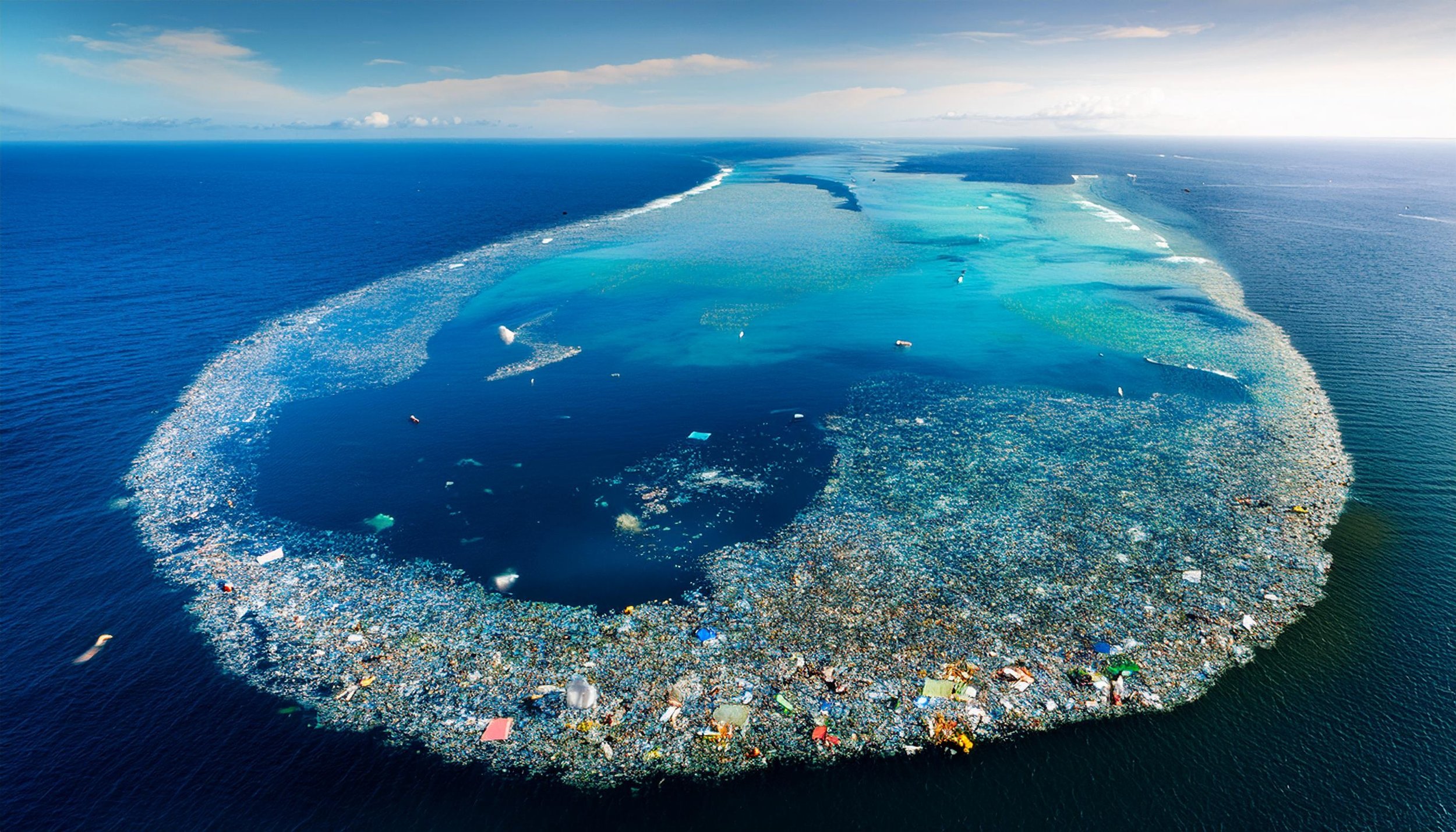
The Great Pacific Garbage Patch
Alternatives to Filtered Tap Water and Single-Use Plastics
If you prefer natural spring water over tap water in any case, buying water in biodegradable packaging provides a good alternative. (Even in that case, however, filtering tap water for showering and protection of appliances is worth considering.) In some locations it may also be viable to arrange for a regular spring water delivery in large 15-20 litre bottles to your home/ office but it’s important to choose a service that collects and refills the same bottles.
Certification and ‘Water Safety & Quality Plans’
Healthy and sustainable building certification frameworks such as the WELL Building Standard, BREEAM and Fitwel recognise water quality as part of holistic health outcomes.
Large public buildings, including hospitals and universities, often employ multi-stage filtration at points of use for drinking water while maintaining centralised treatment for safety.
Especially for larger buildings, filtration is most effective when integrated into broader Water Safety and Quality Plans.
Practical Recommendations
Check the age of your property and whether lead pipework may be present.
Ensure you are familiar with how the water systems in your home work, any risk points for water contamination and maintenance required. Consult specialists and equipment manufacturers as relevant.
Request your water quality report from your local water company and review parameters relevant to your area.
Send a sample of your tap water for laboratory testing. This is more important after renovations, in older buildings and recently-completed new buildings.
Consider your options for water filtration at home. (Keep in mind that different filter types remove different contaminants.)
Replace legacy plumbing materials in your home. Consult an MEP Engineer and an Architect, where relevant, to help plan the refurbishment.
Additional support that may be needed: WaterSafe-approved plumbers and environmental health professionals can also be consulted for building-level assessments.
Different Viewpoints
There is broad consensus among UK regulators that tap water does not need to be filtered for safety or hydration. Water UK states that there is no public health requirement for domestic filtration (25).
Conversely, environmental health researchers emphasise cumulative exposure, vulnerable populations and emerging contaminants as legitimate reasons for precautionary reduction. Both perspectives are valid within their contexts. Filtration should therefore be framed as optional, targeted and context-dependent rather than essential or universally beneficial.
Resources & Further Reading
WHO Guidelines for Drinking‑Water Quality: https://www.who.int/news-room/fact-sheets/detail/drinking-water
UK Drinking Water Inspectorate (DWI): https://www.dwi.gov.uk/
Discover Water, UK: https://www.discoverwater.co.uk/
Water UK: https://www.water.org.uk/
EU: Drinking Water Regulation and Advise: https://environment.ec.europa.eu/topics/water/drinking-water_en
European Environment Agency: https://www.eea.europa.eu/en/topics/in-depth/water
WELL Building Standard (v2) – Water Feature: https://resources.wellcertified.com/articles/whats-new-in-well-v2-water/ and https://v2.wellcertified.com/en/wellv2/water
Environmental Working Group: EWG’s Tap Water Database: http://www.ewg.org/tapwater/ and “Six hazardous contaminants in drinking water”: https://www.ewg.org/news-insights/news/2025/03/six-hazardous-contaminants-drinking-water
Water Quality Association (WQA): https://wqa.org/learn-about-water/common-contaminants/
Conclusion
Filtering tap water in the UK is about responding thoughtfully to the realities of complex environmental exposures, ageing buildings and individual sensitivity within an otherwise robust public health framework. When used appropriately, filtration can enhance comfort, confidence and sustainability without undermining trust in public water supplies.
In the broader context of healthy and sustainable living, water filtration reminds us that health is less often shaped by single interventions and more often by systems, behaviours and environments working together. The goal is not perfection, but proportionate, informed choices that support both human wellbeing and planetary health.
As with buildings themselves, water is part of a complex system where regulation, infrastructure, behaviour and environment interact. Thoughtful filtration, when used appropriately, can be one meaningful component of healthier homes.
Disclaimer:
We will not accept any liability for the use or misuse of this information. We can provide formal architectural advice only when appointed on a project.
Explore Next:
Discuss drinking water filtering with NUEN AI: NUEN AI - Healthy Buildings Intelligence tool.
-
1) Drinking Water Inspectorate (DWI) “Annual Report 2024, England” [accessed 26.1.2026]
2) The World Health Organisation (WHO): “Assessing the Occurrence and Human Health Risk of Per- and Polyfluoroalkyl Substances“
3) Peter Jarvis, John Fawell: “Lead in Drinking Water – An Ongoing Public Health Concern?”, ‘Current Opinion in Environmental Science & Health’, Vol 20, 2021, 100239, ISSN 2468-5844
4) Peter Jarvis, Katie Quy, Jitka Macadam, Marc Edwards, Marjorie Smith: “Intake of Lead (Pb) from Tap Water of Homes with Leaded and Low Lead Plumbing Systems”, ‘Science of The Total Environment’, Vol 644, 2018, pages 1346-1356, ISSN 0048-9697
5) Brandt, Johnson, Elphinston, Ratnayaka: ‘Twort’s Water Supply’, 7th ed, 2017, Elsevier.
6) Sheela Sathyanarayana, Nancy Beaudet, Katie Omri, Catherine Karr: ”Predicting Children’s Blood Lead Levels From Exposure to School Drinking Water in Seattle, Washington, USA”, Ambulatory Pediatrics, vol 6, Issue 5, 2006, pages 288-292, ISSN 1530-1567
7) Lanphear BP, Rauch S, Auinger P, Allen RW, Hornung RW. “Low-Level Lead Exposure and Mortality in US Adults: a Population-Based Cohort Study”. Lancet Public Health. 2018 Apr;3(4):e177-e184. doi: 10.1016/S2468-2667(18)30025-2. Epub 2018 Mar 12. PMID: 29544878
8) Michael J. Nalbandian, Sewoon Kim, Humberto E. Gonzalez-Ribot, Nosang V. Myung, David M. Cwiertny: “Recent Advances and Remaining Barriers to the Development of Electrospun Nanofiber and Nanofiber Composites for Point-of-Use and Point-of-Entry Water Treatment Systems”, Journal of Hazardous Materials Advances, vol 8,v2022, 100204, ISSN 2772-4166
9) World Health Organization (WHO): “No Safe Level: Act Now to End Lead Exposure“ [accessed 26.1.2026]
10) WHO: “Lead in Drinking-Water: Health Risks, Monitoring and Corrective Actions: Technical Brief”, 2022
11) DWI: “Common Contaminants and Their Sources” [accessed 26.1.2026]
12) Helte E, Söderlund F, Säve-Söderbergh M, Larsson SC, Åkesson A: “Exposure to Drinking Water Trihalomethanes and Risk of Cancer: A Systematic Review of the Epidemiologic Evidence and Dose-Response Meta-Analysis”, Environmental Health Perspectives, 2025 Jan;133(1):16001. doi: 10.1289/EHP14505. Epub 2025 Jan 21. PMID: 39837568; PMCID: PMC11750423.
13) Song-lin An, Shi-min Xiong, Xu-bo Shen, Yun-qiao Ni, Wei Chen, Cai-die He, Yuan-zhong Zhou: “The Associations Between Exposure to Trihalomethanes During Pregnancy and Adverse Birth Outcomes: A Systematic Review and Meta-Analysis”, Chemosphere, vol 293, 2022, 133524, ISSN 0045-6535
14) Environmental Working Group (EWG): “EWG’s Water Filter Guide: Overview of Water Filter Technologies” [accessed 26.1.2026]
15) WHO: Guidelines for Drinking Water Safety, Fourth ed., 2022, p. 477
16) BBC Future: “Is Filtered Water Healthier than Tap Water?” [accessed 26.1.2026]
17) Aswin Thacharodi, Saqib Hassan, Thanushree A. Hegde, Dhanya Dilip Thacharodi, Kathirvel Brindhadevi, Arivalagan Pugazhendhi: “Water a Major Source of Endocrine-Disrupting Chemicals: An Overview on the Occurrence, Implications on Human Health and Bioremediation Strategies”, Environmental Research, vol 231, Part 1, 2023, 116097, ISSN 0013-9351
18) Magdalena Zarębska, Sylwia Bajkacz, Katarzyna Malorna, Kamila Torchała: “Effectiveness of Pitcher and Bottle Filters to Remove Poly- and Perfluoroalkyl Substances (PFAS) from Drinking Water”, Science of The Total Environment, vol 976, 2025, 179327, ISSN 0048-9697
19) WHO: “Water Sanitation and Health: PFOS and PFOA in Drinking-Water: Background Document for Development of WHO Guidelines for Drinking-Water Quality” [accessed 26.1.2026]
20) Doria Mde F, Pidgeon N, Hunter PR: “Perceptions of Drinking Water Quality and Risk and its Effect on Behaviour: a Cross-National Study”, Science of the Total Environment, 2009 Oct 15;407(21):5455-64. doi: 10.1016/j.scitotenv.2009.06.031. Epub 2009 Aug 7
21) Zhou Hao-long , Wei Mu-hong , Cui Yuan , Di Dong-sheng , Song Wen-jing , Zhang Ru-yi , Liu Jun-an, Wang Qi: “Association Between Water Intake and Mortality Risk — Evidence From a National Prospective Study”, Frontiers in Nutrition, vol 9 - 2022, DOI:10.3389/fnut.2022.822119, ISSN=2296-861X
22) UK Government: Committee on Toxicity of Chemicals in Food, Consumer Products and the Environment (COT): “Statement on the Effects of Lead on Maternal Health”, COT/2024/03
23) RECOUP: “UK Household Plastic Packaging Collection Survey 2024” [accessed 27.1.2026]
24) Gleick, Peter & Cooley, H. (2009). “Energy Implications of Bottled Water”, Environmental Research Letters, 4. 014009. 10.1088/1748-9326/4/1/014009
25) Water UK: “No Filter Needed” [accessed 27.1.2026]